Twelve pictures of the Anti-Japanese War: Look! "Micro-expression" in those eventful years —— Commemorating the 75th anniversary of the victory of China people’s War of Resistance against Japanese Agg
CCTV News:On September 3rd, 2020, we celebrated the 75th anniversary of the victory of China people’s War of Resistance against Japanese Aggression and the victory of the world anti-fascist war. Recalling the past, it was an unforgettable history; Show the future, it will be a memory that will never be dusty. It is engraved in the long history, and it is engraved in the heart of every Chinese. In China People’s War of Resistance against Japanese Aggression Memorial Hall, it has a more concrete expression and a more detailed "breath". Remembering history is to enlighten the future. On the occasion of this anniversary, CCTV and China People’s War of Resistance against Japanese Aggression Memorial Hall jointly produced 12 posters commemorating the cultural relics of the Anti-Japanese War, so that those "micro-expressions" in eventful years can bring you closer to the initial heart of realizing the Chinese dream of great rejuvenation. (Planning/Zhang Li, Design/Liu Jingjing, thanks to China People’s War of Resistance against Japanese Aggression Memorial Hall)
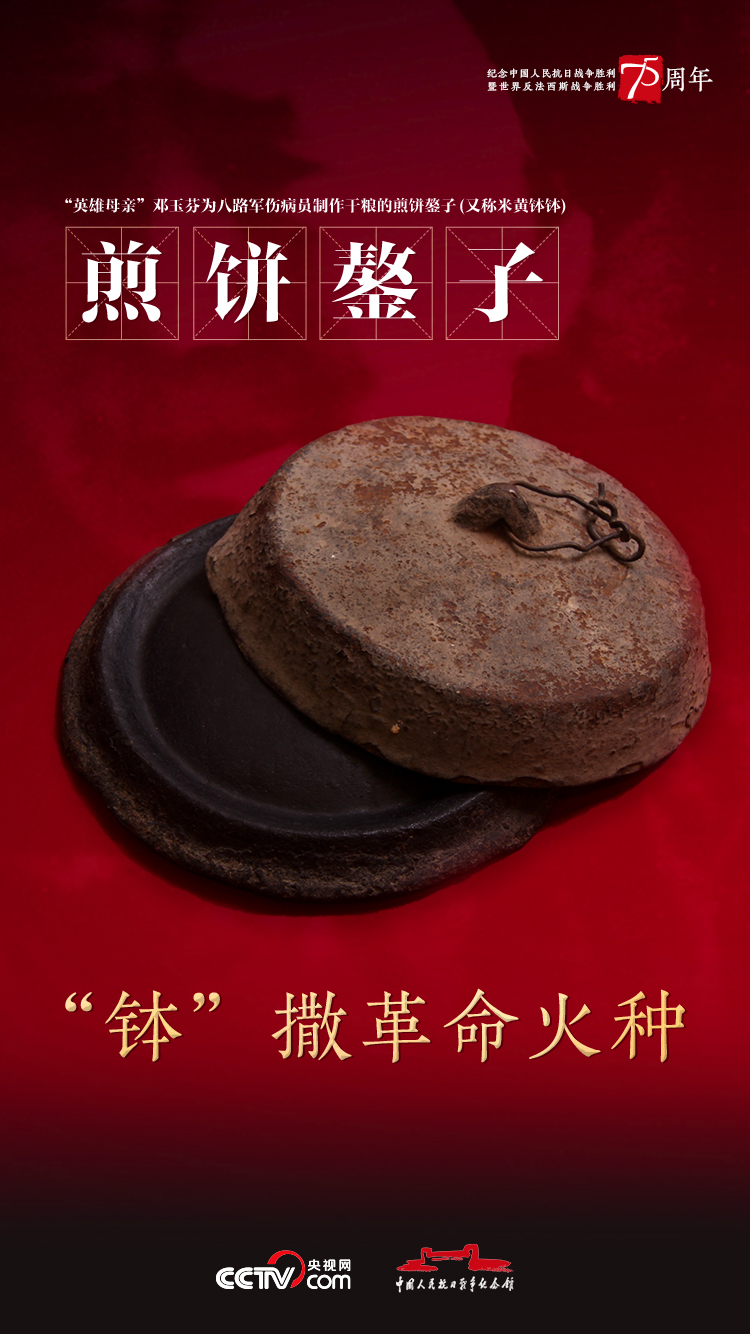
"Bowl" scatters revolutionary kindling
Pancakes, "heroic mother" Deng Yufen made dry food cookers for the eighth route army wounded and sick.
Deng Yufen is a widely acclaimed "heroic mother", a native of Miyun County, Beijing, who has been farming all her life. For the revolutionary cause, she gave up her family to help the poor, and sent her husband and five children to the anti-Japanese front line successively, which was praised as "contemporary She Taijun" by the local people.
This is Deng Yufen’s cookware for making dry food for the wounded and sick of the Eighth Route Army. Its scientific name is pancake, and it is locally called beige bowl. During the Anti-Japanese War, the conditions were very difficult. The old man Deng Yufen scrimped and saved, and made the saved food into dry food with pancakes, and gave it to the eighth route army wounded and sick, so that they could recover as soon as possible and kill more enemies again on the battlefield.
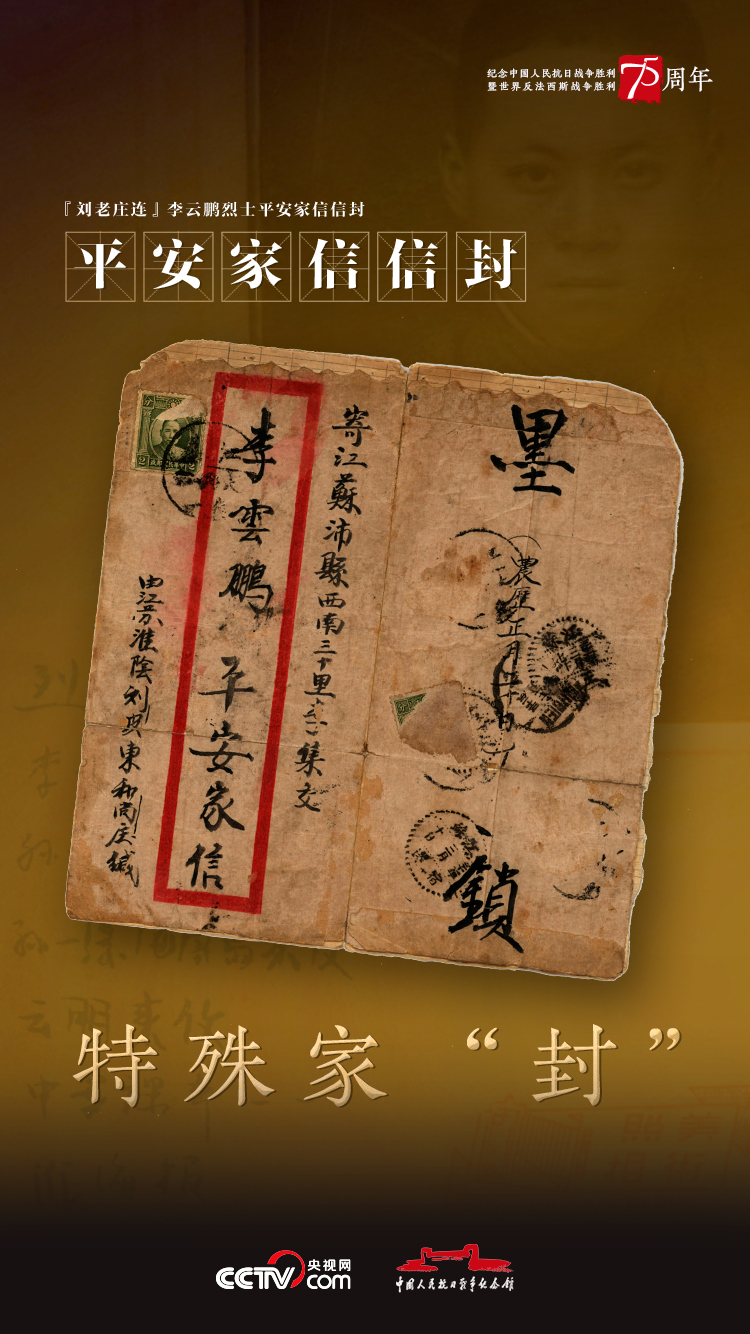
Special home "seal"
Photos of "Liu Lao Zhuang Lian" Li Yunpeng Martyrs and Envelopes of Peace Letters.
This is a group of cultural relics of Li Yunpeng among the 82 martyrs of Liu Laozhuang. It is an envelope of Li Yunpeng’s letter to his family, a photo of Li Yunpeng and a martyr’s certificate issued in 1983. This group of cultural relics has become the only memory of Li Yunpeng martyrs for relatives, and it has also filled the gap in the cultural relics of Liu Laozhuang, a martyr group, in China People’s War of Resistance against Japanese Aggression Memorial Hall.
Li Yunpeng (1902— 1943), formerly known as Li Yaguang. In 1939, he joined the anti-Japanese propaganda team and joined the Communist Party of China (CPC) in the same year. In March 1943, the Japanese army carried out a large-scale "mopping-up" of the Huaihai anti-Japanese base area in northern Jiangsu. On March 17th, more than 1,000 Japanese puppet troops besieged the leading organs of the Party and government in Huaihai District on the north bank of Liutang River. In order to cover the transfer of the main force and the leading organs of the party and government, the 4 th Company of the 2 nd Battalion of the 19 th Regiment of the 3 rd Division of the 7 th Brigade of the New Fourth Army was ordered to stop the enemy in Liulaozhuang. On the morning of 18th, 82 people of the whole company fought bloody battles, repelled the Japanese puppet troops for five times in a row, and killed more than 300 people. In the end, because they were outnumbered, they all died heroically.
They are company commander Bai Sicai, instructor Li Yunpeng, deputy company commander Shi Xuefu, platoon leader Wei Qingzhong, Jiang Yuanlian, Liu Dengfu, culture teacher Sun Zunming and health worker Yang Linbiao & HELIP; … Chen Yi, the acting commander of the New Fourth Army, wrote an article commending: "The spirit of loyalty and courage of the martyrs who died in the country can set an example for us." Zhu De, Commander-in-Chief of the Eighth Route Army, praised the company as "the highest expression of heroism of our commanders and fighters" in the article "On the Heroism of the Eighth Route Army and the New Fourth Army".
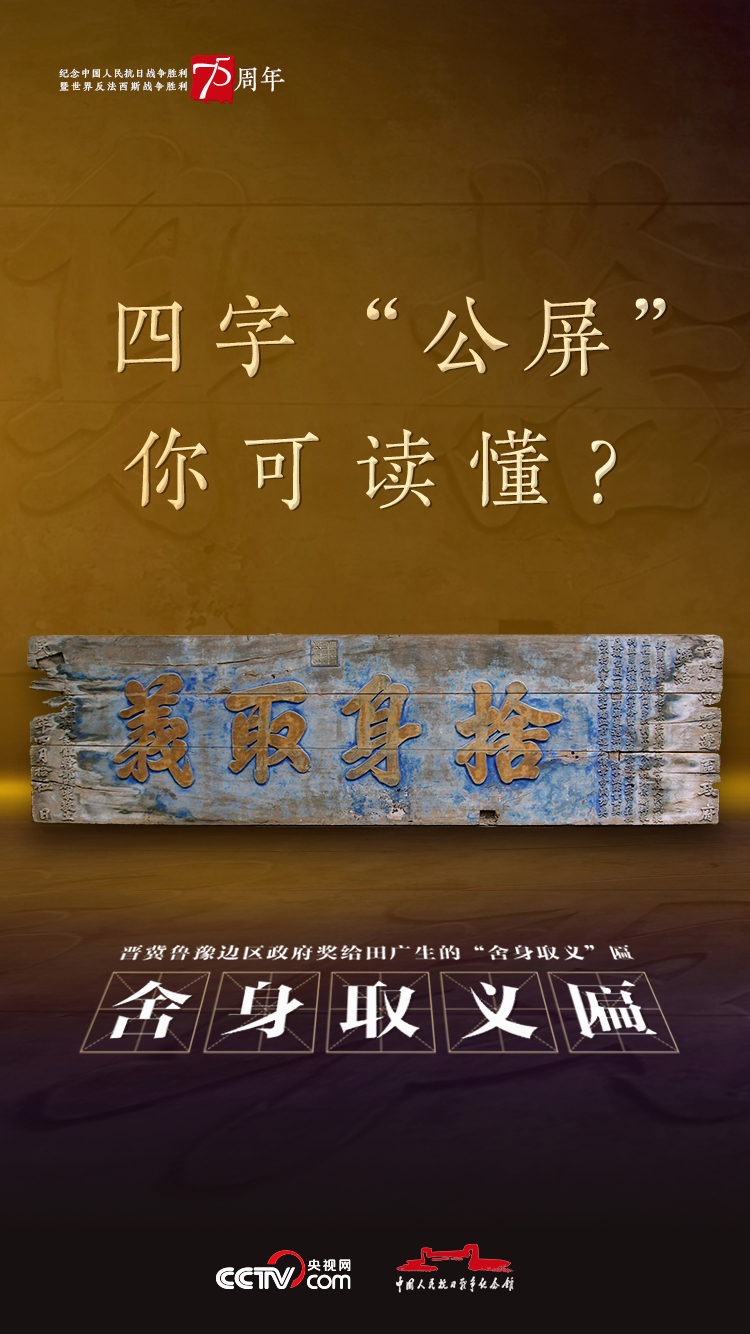
Can you read the word "public screen"?
Tian Guangsheng’s plaque "Sacrificing one’s life for righteousness" awarded by the government of Shanxi-Hebei-Shandong-Henan Border Region.
This plaque, awarded by the government of the Shanxi-Hebei-Shandong-Henan Border Region in recognition of the heroic resistance against Japan, is 250 cm long and 80 cm wide. It is made of poplar and has yellow characters on a blue background. In the middle of the plaque, four gold characters "sacrifice for justice" are engraved from right to left. On the top of the word, there is a seal of "Shanxi-Hebei-Shandong-Henan Border Region Government". On the left side of the plaque, there is a vertical inscription "All cadres and masses in Shanjiaobian Village respect April 15th, 35th year of the Republic of China". On the right side of the plaque, a few lines are vertically engraved: "The government of the Shanxi-Hebei-Shandong-Henan border region awards — Brave Comrade Guangsheng: During the national revolution, you served as the director of the people’s armed forces. After years of struggle with the enemy and puppet troops, you were indomitable, always defending the interests of the masses, being brave and active, and sticking to the end for the revolution. Unfortunately, he was surrounded by the enemy on April 15, 1933, and sacrificed his opponent to protect the masses from retreating. His blood is immortal and his reputation is immortal. Where revolutionary volunteers March forward in blood, Geng continues the revolution successfully. "
This plaque was written by Cao Fengchun, a primary school teacher at that time, and has been hung above the gate of Tianjia for a long time.
Tian Guangsheng, also known as Tian Jingyun, is a native of Maozhuang Village, Gucheng Town, Wuxiang County, Shanxi Province. He used to be the militia director of the Armed Forces Department of Wuxiang County. In 1944, when he led the militia to fight against "mopping up", he fought to the death to cover the masses and fought against the Japanese puppet troops, and eventually died because he was outnumbered.
On April 15th, 1946, all the cadres and the masses in Shanjiaobian Village gathered at Tian Guangsheng’s home in Maozhuang Village, Gucheng Town, Wuxiang County, Shanxi Province, and hung up the plaque of "Giving My Life for Justice" for Tian Guangsheng as a memorial.
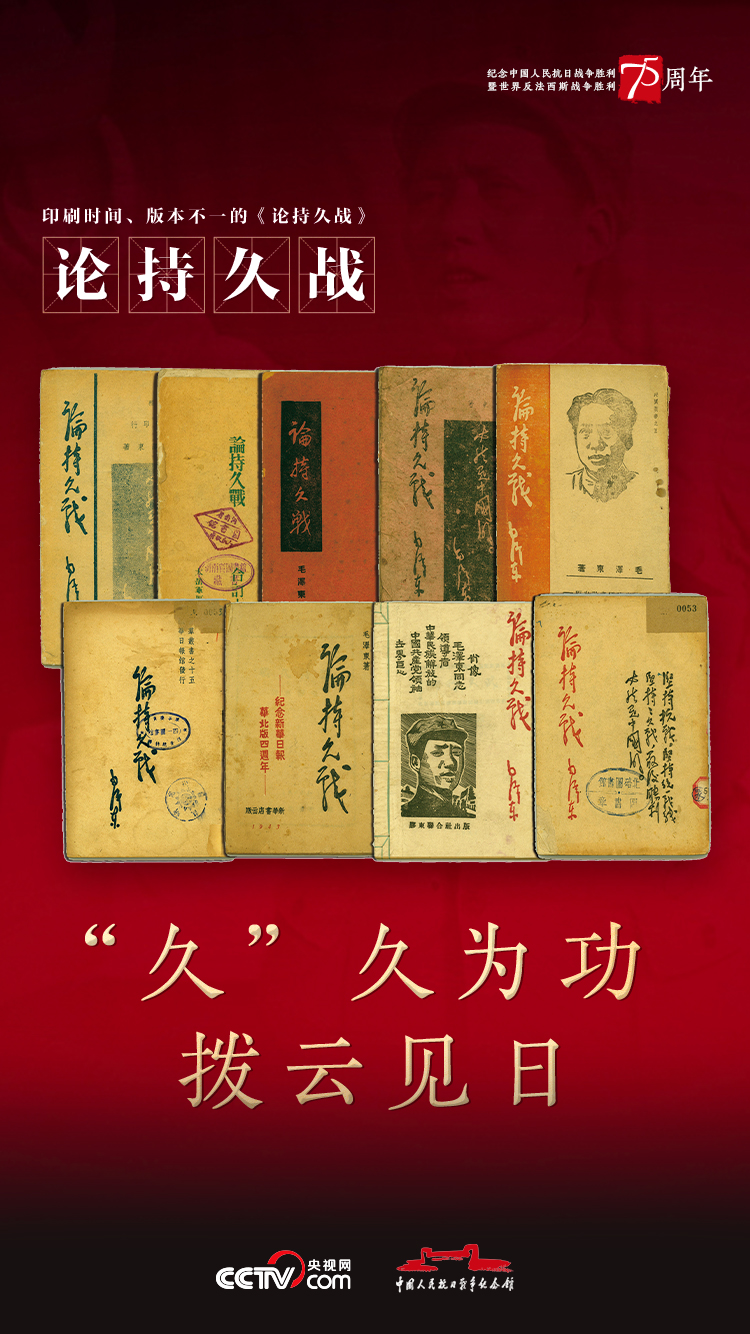
"Long" is a long time for work, and the clouds will see the sun.
The paper has already turned yellow, and the printing time and version are different.
These books have long been yellow, and the printing time and version are different, but they have a common name — — On protracted war. This is an important work published by President Mao Zedong during the Anti-Japanese War. At the critical moment, it cleared the fog of people’s thoughts and pointed out the direction for the victory of the Anti-Japanese War.
After the July 7th Incident, in May 1938, after 10 months of national anti-Japanese war, the fog in most Chinese’s mind became heavier and heavier. Will China be subjugated? How long will the Anti-Japanese War last? How can we win?
At such a critical moment, Mao Zedong felt it necessary to make a summary explanation of the experience of the 10-month anti-Japanese war, to answer people’s doubts, and to refute the two wrong views of national subjugation and quick victory. So, in May 1938, in a cave in Yan ‘an, he wrote this article "On Protracted War" sleepless nights.
On protracted war was not only published in Yan ‘an and Wuhan, but also translated into English and spread overseas, which had a wide influence. Although the full text is only over 50,000 words, it has pointed out the direction for China’s war of resistance against Japan and strengthened the confidence of the people of China in their struggle against the Japanese aggressors.
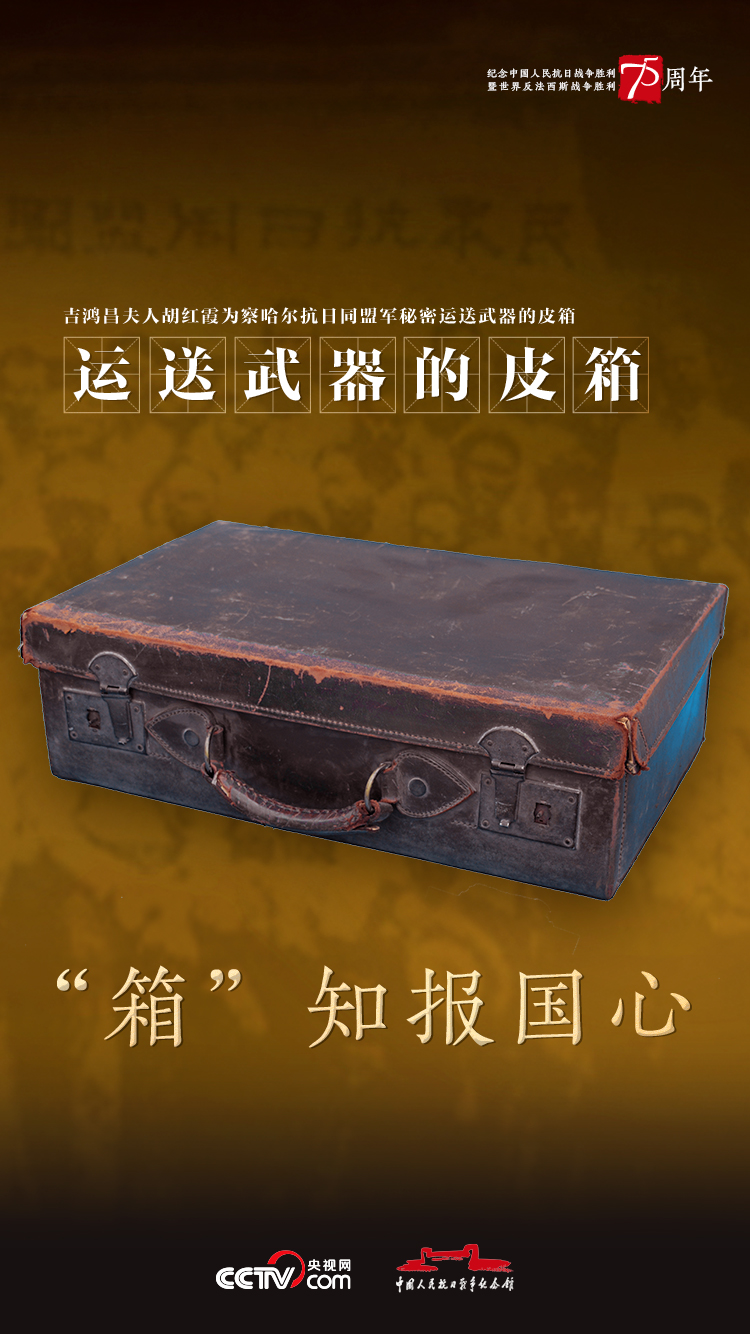
"Box" knows how to serve the country.
The suitcase used by Ji Hongchang’s wife Hu Hongxia when she sent weapons to Ji Hongchang during the Anti-Japanese War.
Ji Hongchang (1895 ~ 1934) was born in Fugou, Henan Province. At the age of 18, he joined the Northwest Army. He was brave and resourceful. He rose from an ordinary soldier to a commander step by step, then from sympathy revolution to belief revolution, and finally joined the Communist Party of China (CPC). After the September 18th Incident in 1931, Ji Hongchang, who was in Europe, resolutely returned to China to carry out the work of the anti-Japanese United front, traveling between Beijing and Tianjin, contacting patriots and opposing Chiang Kai-shek and Japan.
Ji Hongchang and his wife Hu Hongxia sold their property and clothes to raise arms for the anti-Japanese front. On November 9, 1934, Ji Hongchang was arrested by the Kuomintang reactionaries and killed on November 24, making a heroic sacrifice for resisting Japan and saving the country. Before his execution, it was snowing lightly, and he wrote a tragic poem on the snow with branches: "I hate not resisting Japanese death, but I am ashamed today." The country is still broken, so why should I cherish this head? "
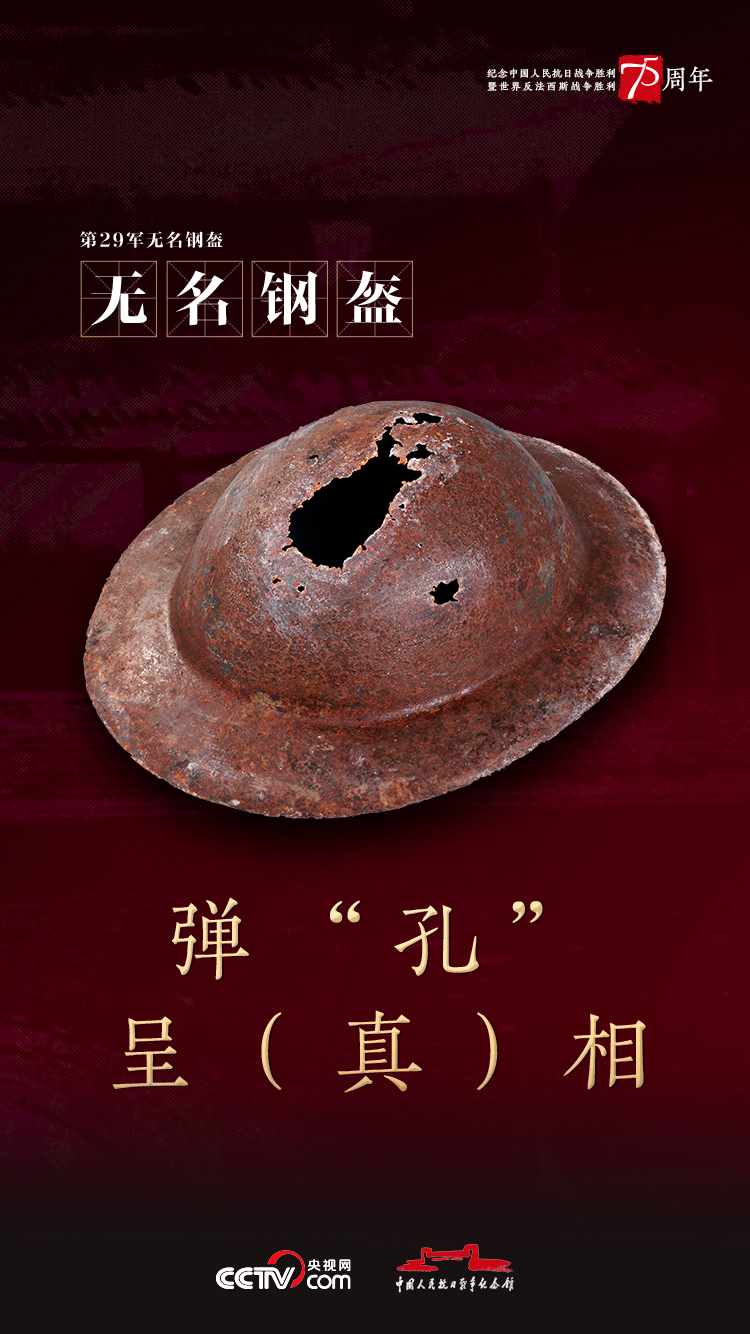
The bullet hole is in (true) phase.
The first 29 army nameless helmet
The first 29 army helmet was unearthed under the Wanping City Wall in 1985. The construction company handed it over to the Lugouqiao Cultural Relics Institute at that time and then to the exhibition office of the Preparatory Committee of the Anti-Japanese War Museum. There are 17 neutron bombs in the helmet. The helmet is an oval hat with a rim, with a height of 27 cm and a diameter of 32.5 cm. The top of the helmet is defective and corroded as a whole. It is used in 29 army, China, which is stationed in Wanping Ancient City, Lugou Bridge. This helmet that "experienced" the July 7th Incident is a national first-class cultural relic.
So many gun holes came from the fierce war 83 years ago. On the night of July 7, 1937, Japanese troops stationed in Fengtai conducted provocative military exercises near Lugou Bridge. After the exercise, the Japanese army claimed that a Japanese soldier was "missing" during the exercise and asked to enter Wanping Ancient City for a search. After being sternly rejected by the Chinese side, it suddenly launched an attack on the China army and shelled Wanping Ancient City. In the face of the Japanese attack, 29 army, the defender of China, was forced to fight back in self-defense, and the July 7th Incident broke out. The July 7th Incident became the beginning of China’s national anti-Japanese war, which opened up the eastern main battlefield of the world anti-fascist war.
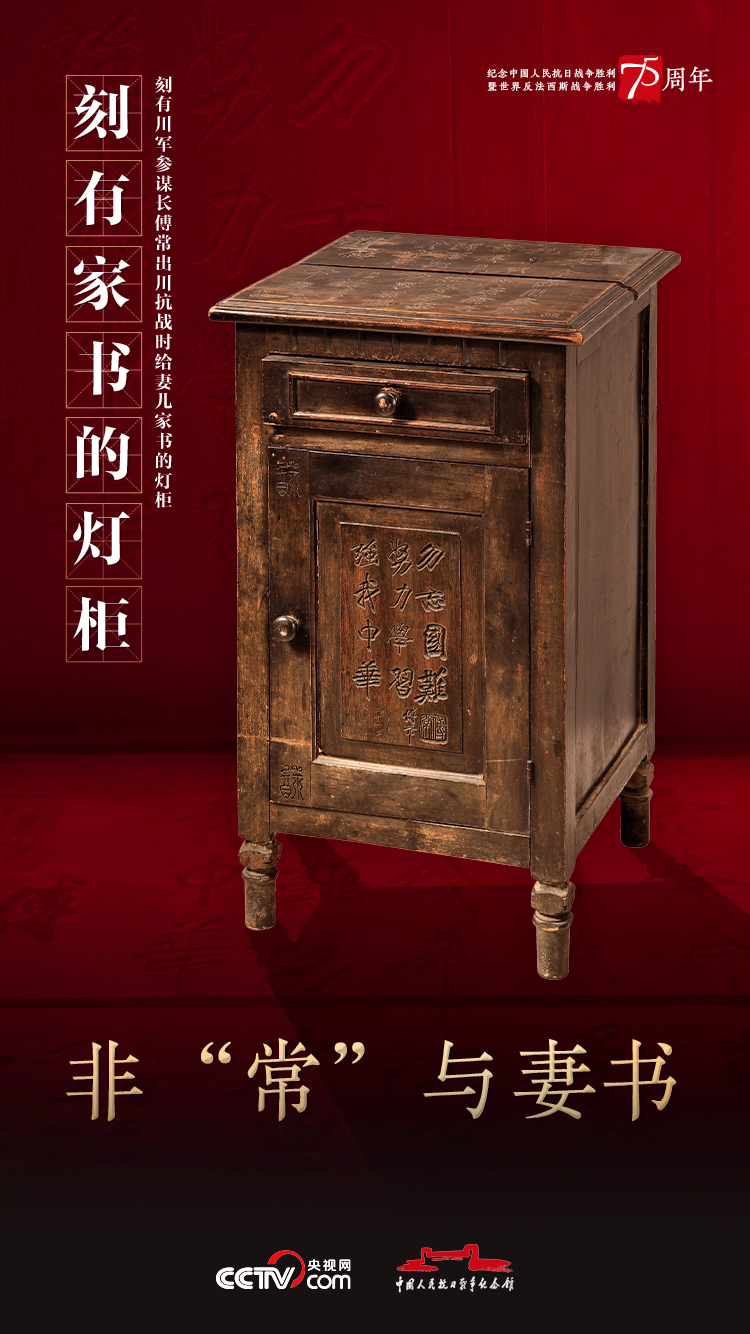
Non-normality and Wife’s Letter
Lamp cabinet engraved with letters from Fu Chang, chief of staff of Sichuan Army, to his wife and children during the Anti-Japanese War.
On September 5, 1937, a "Meeting of Soldiers Leaving Sichuan to Resist the Enemy" was held in Shaocheng Park (now People’s Park) in Chengdu, Sichuan Province, with about 10,000 participants. Many officers and men who went out to Sichuan to fight against the enemy held the belief that they would die and wrote a suicide note to their families. Fu Chang, then chief of general staff of Sichuan Army, wrote a letter home to his wife, "I was ordered to go out of Sichuan to attend War of Resistance against Japanese Aggression, and I hope you will not forget the national disaster, study hard and strengthen China. Twenty-six years old of the Republic of China belongs to Ding Chou Fu Chang in August, and he is entitled to be a suicide note.
After Fu Chang went to war, his wife found a craftsman and carved this letter from her husband’s family on a lamp cabinet according to the original style. The bonfire baptism and the lamp cabinet have been preserved to this day, which has become the witness of China soldiers’ desperate war of resistance and the demonstration of Sichuan Army’s war of resistance against Sichuan.
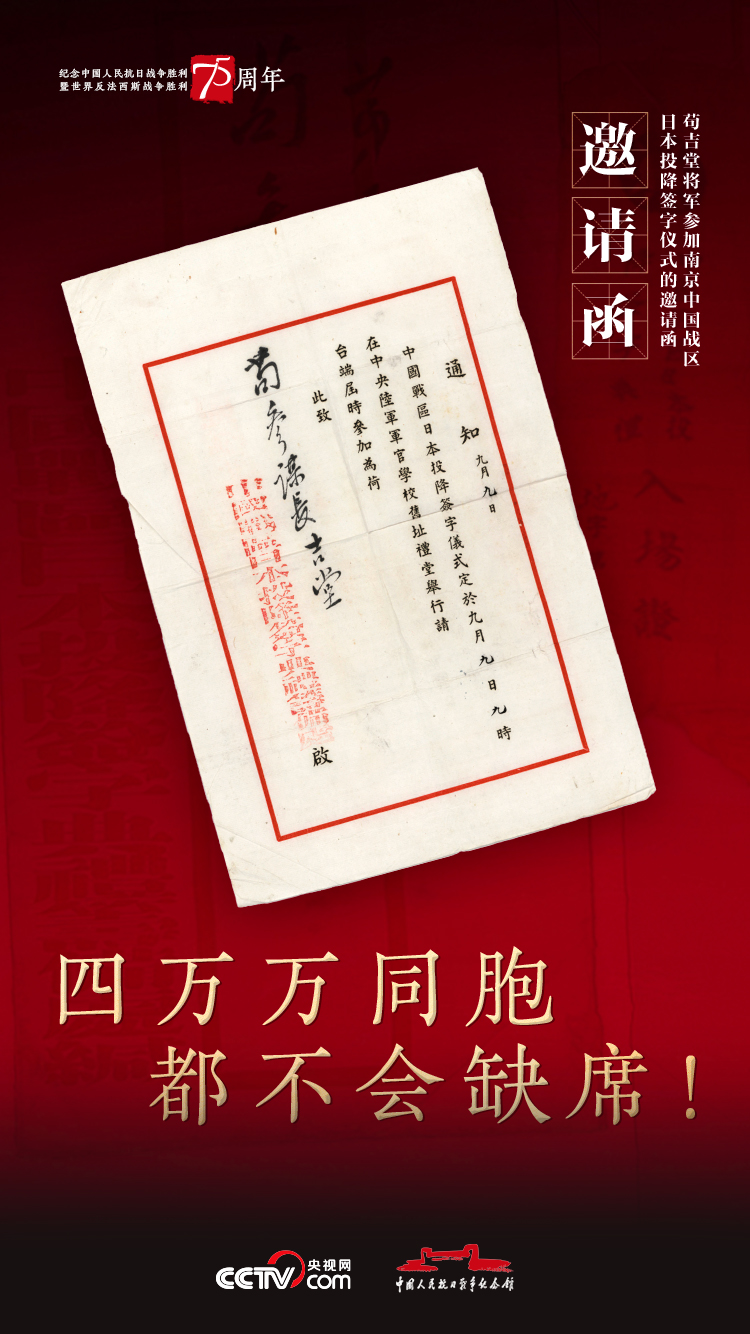
400 million compatriots will not be absent!
On September 9, 1945, General Gou Jitang was invited to attend the signing ceremony of Japanese surrender in Nanjing China Theater.
This is an invitation letter from General Gou Jitang to attend the surrender ceremony of Nanjing China Theater. The invitation letter is enclosed in a white envelope with a note page and a red admission card. The "Precautions" clearly defined the discipline of the venue. Such as: don’t insult the Japanese representative’s words and actions; No smoking, leaving your seat at will, laughing and making noise during the signing; Officers wear yellow military uniforms, civil servants wear Chinese tunic suits or suits, photographers are not allowed to take pictures near the signers, and journalists are not allowed to surround the envoys to ask questions without permission.
During the Anti-Japanese War, Gou Jitang successively served as the chief of staff of the 13th Army, the chief of staff of the 89th Division, the chief of staff of the 10th Division, the chief of staff of the 85th Army, the chief of staff of the 20th Army, the chief of staff of the 31st Army, the deputy commander of 29 army, the deputy chief of staff of the 3rd Army, and the director of the front command post of the 3rd Army.
On September 9th, 1945, General Gou Jitang was invited to attend the surrender ceremony of Nanjing China Theater, and witnessed the glorious moment when Okamura Ningji, the commander-in-chief of Japan’s China Dispatching Army, signed the Japanese surrender letter and surrendered to the China government, which made all Chinese people proud.
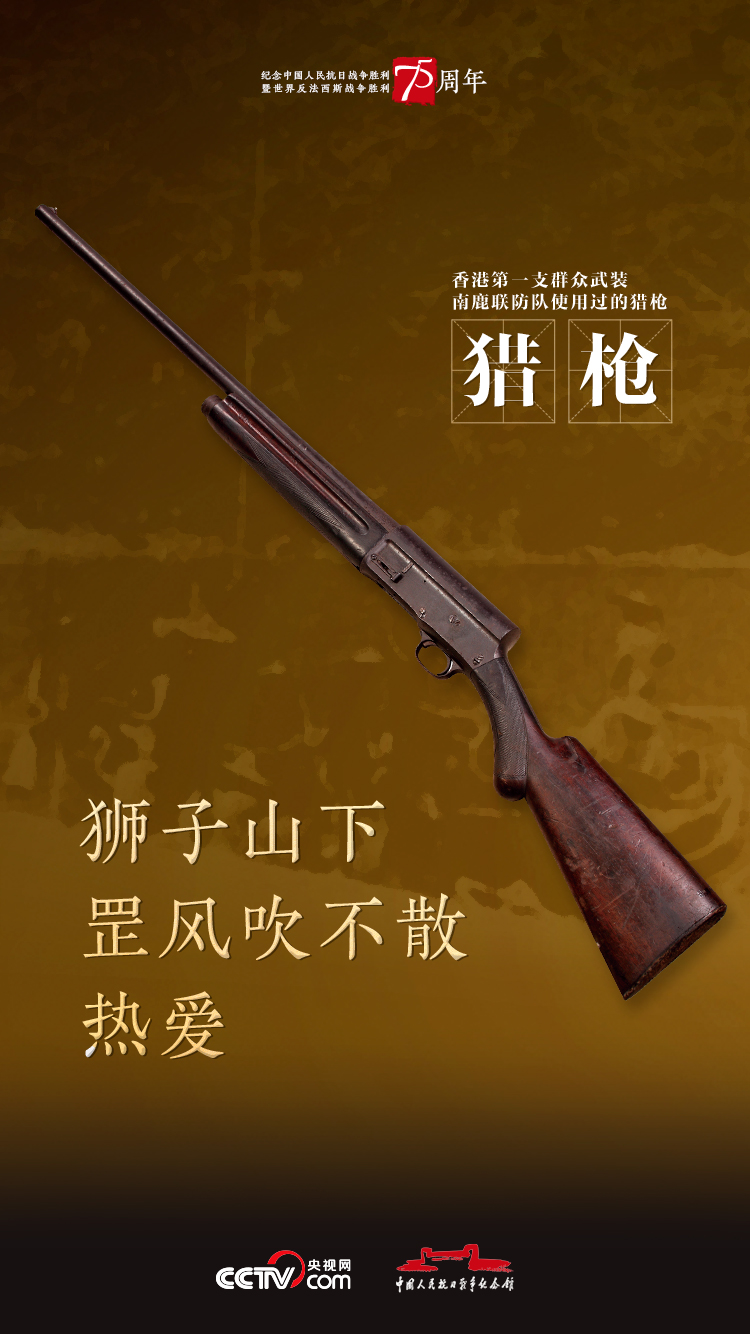
Under the Lion Mountain, Gangfeng can’t blow away love.
The shotgun used by the first mass armed South Deer Defense Team in Hong Kong.
At the end of 1941, the Guangdong People’s Anti-Japanese Guerrilla Corps (reorganized into Dongjiang Column in December 1943) organized the first mass armed forces in the New Territories of Hong Kong — — South (Chung) Deer (Neck) Joint Defense Team, the Hong Kong-Kowloon Independent Brigade of Guangdong People’s Anti-Japanese Guerrilla Corps was formally established in Hong Kong-Kowloon area in 1942, with six sub-teams, including pike team, spear team, maritime team (the establishment of maritime team was changed to maritime squadron in 1943 due to the continuous growth of the team), urban underground armed team and intelligence system. At the beginning of 1944, Luo Oufeng was ordered to be the captain of the maritime squadron.
At the beginning of the establishment of the South (Chung) Deer (Neck) Defense Team, due to the lack of weapons, villagers in each village donated guns for their own use to prevent bandits. Luo Oufeng, Luo Yuzhong and Luo Rucheng donated three shotguns of their own, and this shotgun was one of them. Luo Oufeng also joined the anti-Japanese ranks. He used this gun to attack the Japanese army and exterminate bandits in the New Territories many times.
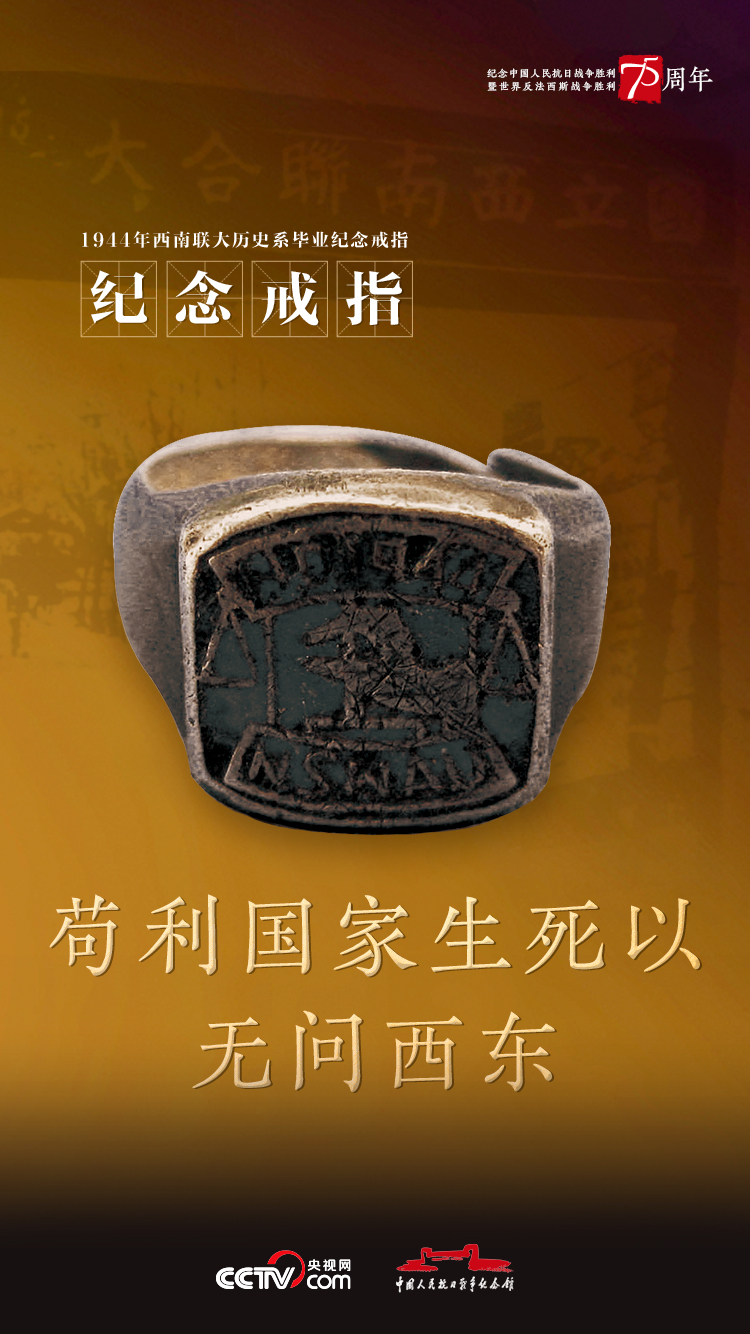
If the country lives and dies, there is no question about the west and the east
1944 Graduation Commemorative Ring of The National SouthWest Associated University History Department
The ring was designed in 1943 by Xu Shoue, a student of The National SouthWest Associated University History Department (also known as Xu Shiqian, later the head of Peking University History Department).
In 1943, a large number of students responded to the government’s call and joined the Chinese Expeditionary Force and the Indian Army. The history students who will graduate in 1944 joined the army before graduation, and designed this ring before graduation, which was passed by all the history students as a graduation souvenir. In the middle of the front of the ring is a hand-written pattern on the balance, which means that history should be written straight and not biased; The upper part is "H D 1944", which means "History Department 1944" and history department 1944; The lower part is "N S W A U", which means "National Southwest Associated University", that is, National Southwest Associated University.
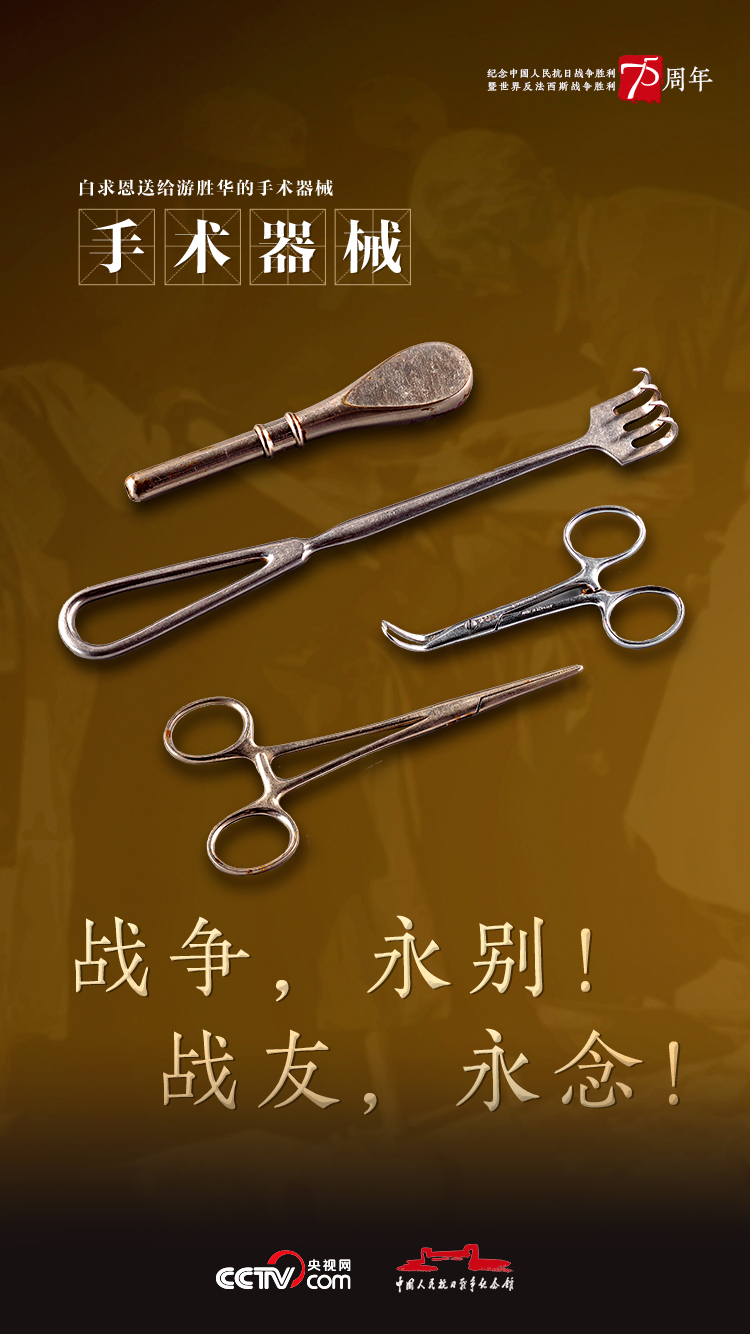
War, farewell; Comrade in arms, always remember
Bethune gave You Shenghua, Vice Minister of Health of Shanxi-Chahar-Hebei Military Region, surgical instruments.
"Dear Nie Commander:
I feel very ill today, maybe I will say goodbye to you forever! … …
Give Minister Ye two boxes; Vice minister you eight kinds of surgical instruments; Dr. Lin can take fifteen kinds; President Jiang of the health school asked him to choose two items at will as a souvenir! … … "
After Bethune arrived in the Shanxi-Chahar-Hebei Military Region, Nie Rongzhen sent You Shenghua to assist Bethune in his work and take care of his life, and asked him to learn Bethune’s surgical skills. You Shenghua was one of Bethune’s most satisfied surgeons. These surgical instruments are clearly recorded in Bethune’s will.
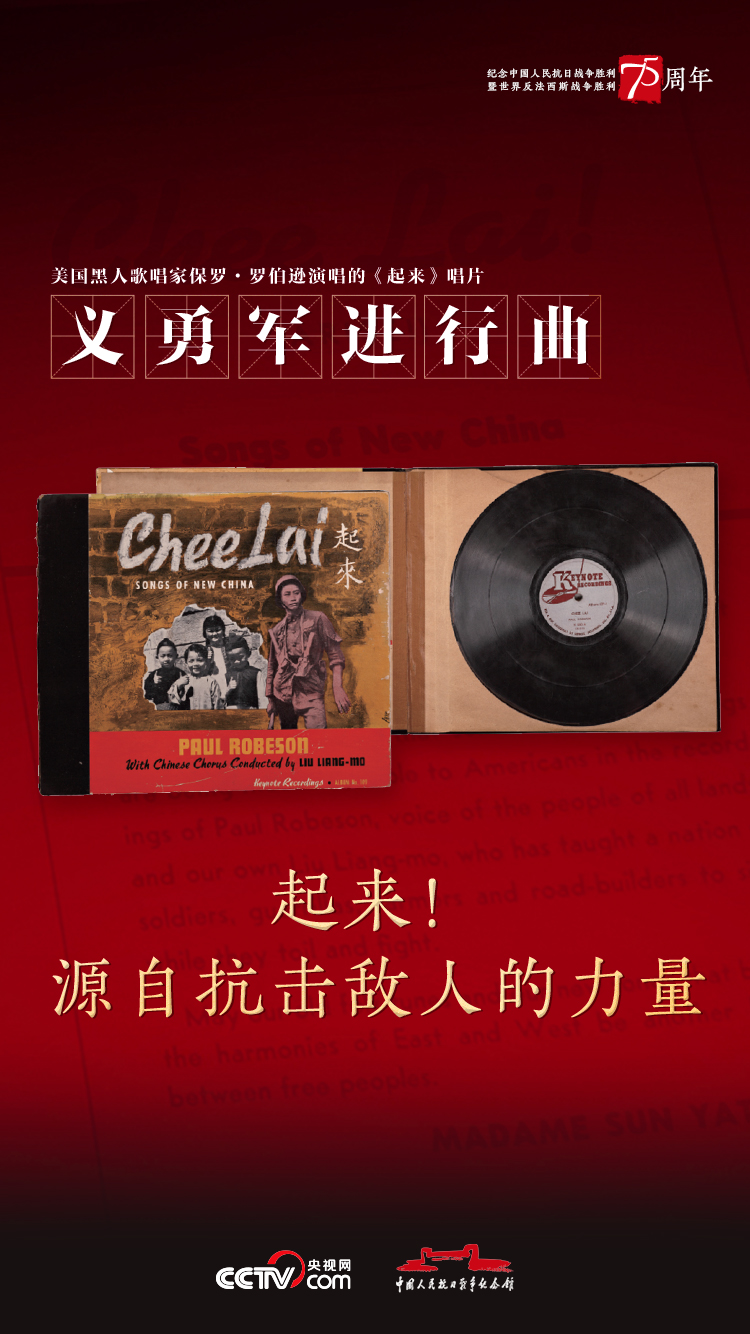
Get up! From the power to fight the enemy.
Paul robeson, an American black singer, sang Get Up.
The English version of "Get Up" was released in new york in 1941. The black singer paul robeson sang, with the preface by Soong Ching Ling, and wrote an inscription on the cover page: "A new popular singing movement has taken place in China, which originated from the power to resist the enemy … …” . All the proceeds from the release of the record were donated to the Alliance for the Defence of China and supported the just cause of the people of China, which is an example of international friends’ support for China’s war of resistance.