"wonder woman" Gal Gadot will play Cleopatra, causing online controversy.
Recently, Gal Gadot, an Israeli actress, announced that she would play the legendary queen Cleopatra in the new epic "Cleopatra" newly approved by Paramount Film Company, and the director of the film was female directors Jenkins, who worked with her in two Wonder Woman films.
Cleopatra should not be played by Israeli actors?
Once the news was published, it quickly became a hot spot on several social media platforms. Most netizens, especially Gado’s loyal fans, expressed great expectations for her new role, but many netizens quickly questioned: Is it appropriate for such an Israeli-born white actress to play the Queen of Egypt?
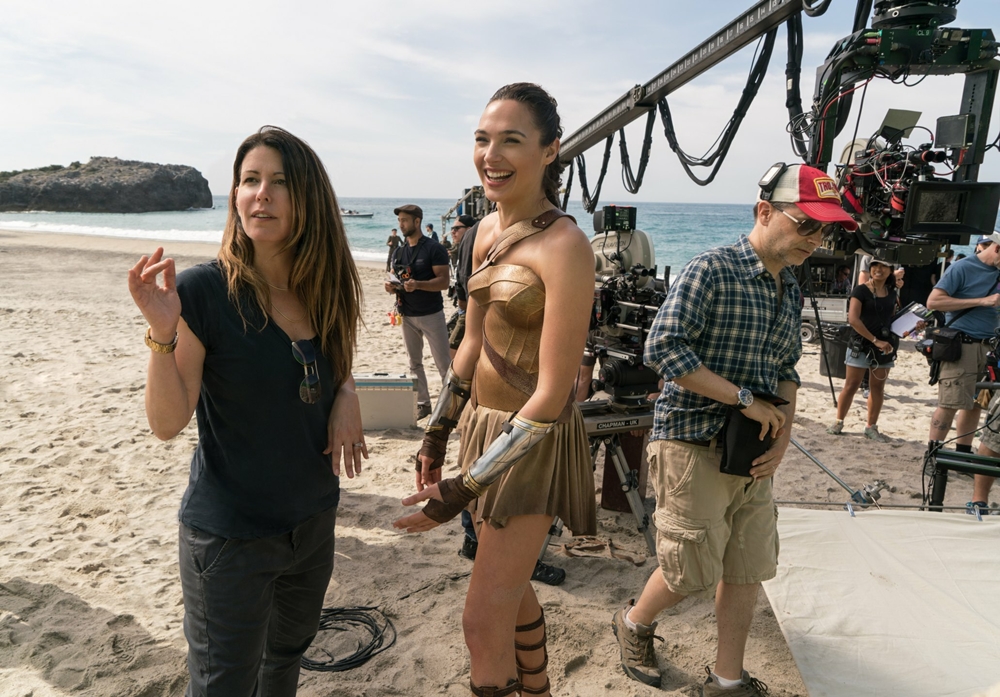
Gal Gadot (middle) will collaborate with Patty Jenkins (left) from Wonder Woman again.
These netizens mistakenly believe that Cleopatra, as the supreme ruler of Egypt, must belong to colored people and must be a black woman from northern Africa. On this basis, they think that this role should never be played by Gado, and Paramount should give this opportunity to a black Hollywood actress, which is the right thing to do.
However, the views of these people were quickly criticized or ridiculed by more netizens on social media platforms. "Cleopatra is not black, her ancestors are Greek, look at her simulacra, you will know. You stupid so-called social justice fighters, stop tampering with history. " A tweet that received the most forwarding wrote. Indeed, in all kinds of literary works and paintings handed down from ancient times, Cleopatra’s skin color is basically described as ivory white, which is irrelevant to African blacks.
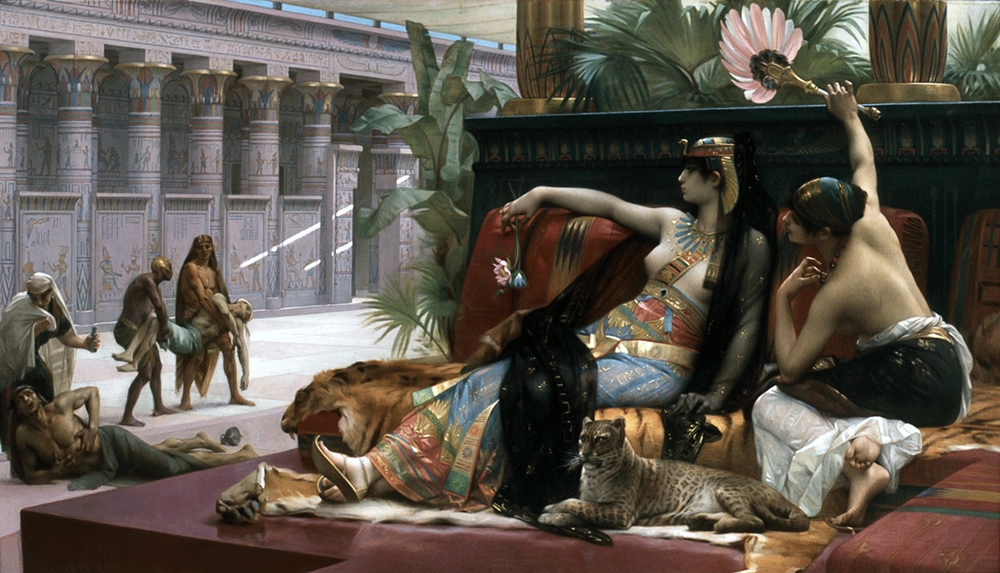
Cleopatra written by French painter alexander Cabanel is fair-skinned.
Sarah Parcak, an expert in Egyptology from Alabama State University, also explained to netizens that Cleopatra in history was born in Alexandria, Egypt in 69 BC, but her ancestral home was Ptolemy I Soter, but she was Alexander the Great’s right-hand man and a Greek born in a Macedonian aristocratic family. "As for her mother’s situation, whether she is an Egyptian, a Greek or a native is not very clear at present, and there are many possibilities. But Cleopatra is at least 50% Greek, and her skin color should be whiter than that of today’s Egyptians. "
In addition to this erroneous view that people are eager to express their opinions because they don’t know enough about historical facts, there is also a criticism that Cleopatra, as the queen of ancient Egypt, is also a part of Egyptian civilization, regardless of her skin color in history. Therefore, it is inappropriate for an Israeli actress to play it.
The representative figure who holds this view is Sameera Khan, a former New Jersey beauty pageant champion and Pakistani-American media person who has gained great popularity in American social media in recent years. She used to be a special correspondent of "Russia Today" TV station in Washington, USA for a long time. She posted a question on her personal Twitter with 65,000 fans: "Which Hollywood idiot thought it would be a good idea to find a very plain Israeli actress to play Cleopatra? Why can’t you find a stunning Arab actress like Nadine Njeim (the 2007 Lebanese beauty pageant champion) to play this role? And, Gal Gadot, you’re a shame. Your country stole Arab land, and now you have stolen Arab movie characters. It’s really speechless. "
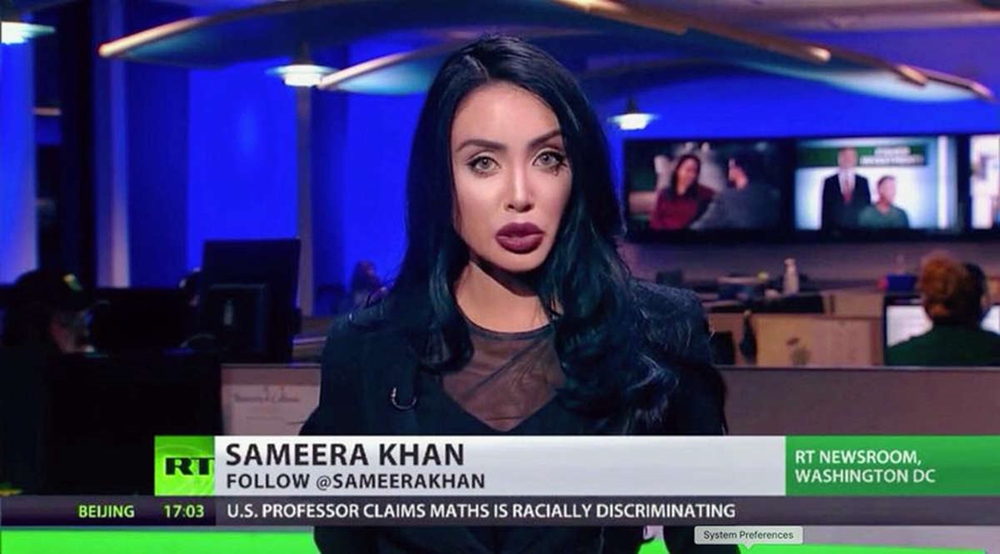
American media person Samira Khan
Rita Panahi, an Iranian-born Australian news hostess with nearly 240,000 followers on Twitter, mercilessly criticized this view. She not only ridiculed Samira Khan for her courage, but also dared to call "wonder woman" Gal Gadot "plain-looking" and accused her of completely losing her mind because of her "morbid hatred" towards Israel.
The Similar Experience of Elizabeth Taylor’s Cleopatra
In history, the legendary story of Cleopatra has been put on the screen many times, and the most famous one is the version starring Elizabeth Taylor in 1963. The film was the global box office champion that year, and the domestic box office in the United States alone reached an astonishing $57.7 million-equivalent to nearly $500 million today. However, the shooting cost of the film was as high as $44 million, which set a historical record at that time. Coupled with the serious delay in the construction period, the investor Fox almost went bankrupt in the 20th century. At the next year’s Oscars, Cleopatra received nine nominations, but in the end, she only won four awards: Best Photography, Visual Effects, Costume Design and production designer. Off-screen, Elizabeth Taylor and richard burton, the famous movie star who plays the role of Anthony in the film, also pretended to have an extramarital affair, and divorced their original partners respectively, and they became husband and wife in 1964.
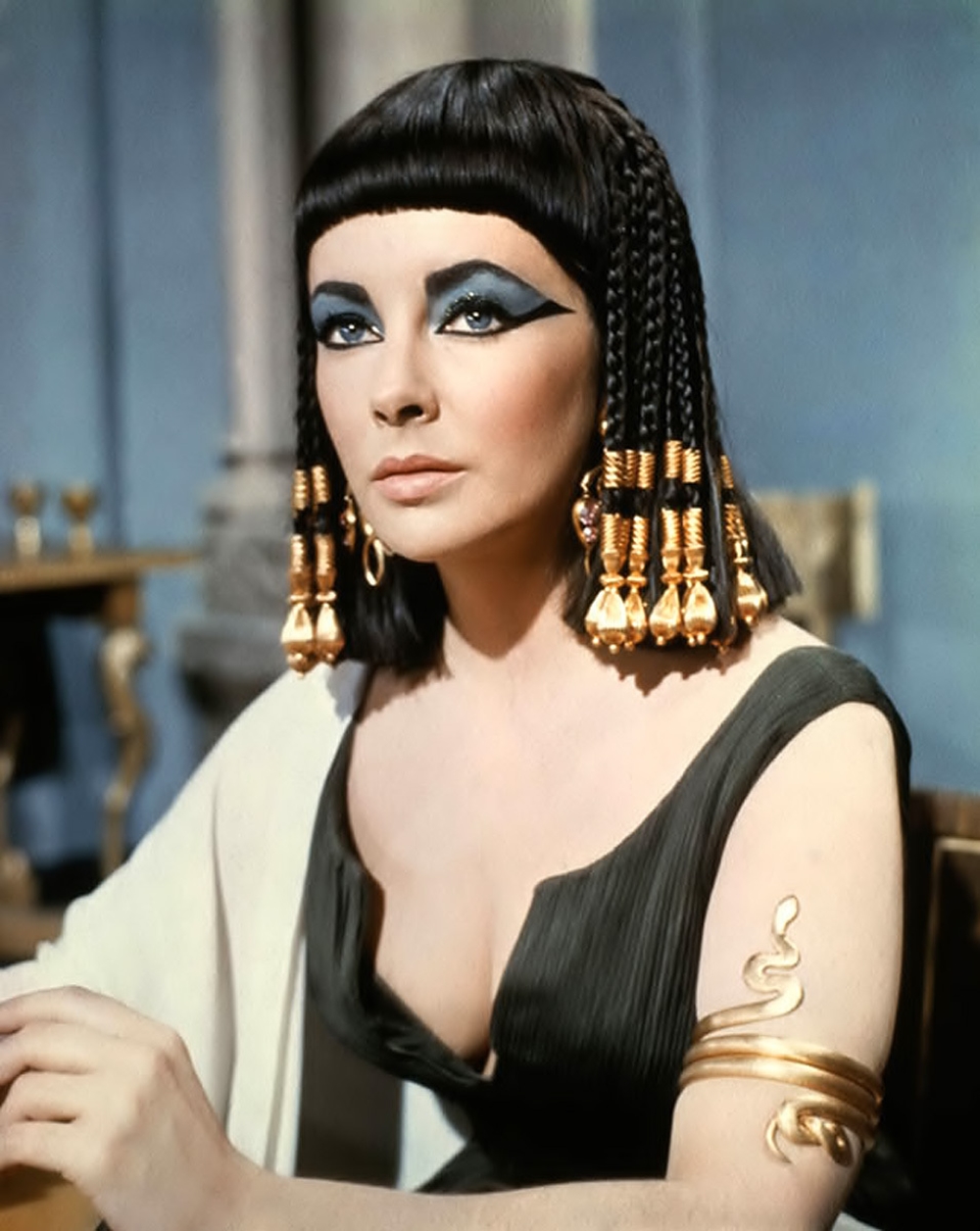
Elizabeth Taylor’s version of Cleopatra was also boycotted by Arab countries because of her conversion to Judaism.
It is worth mentioning that at that time, Taylor played Cleopatra, which also caused a similar controversy. It turned out that in 1959, when Taylor was 27 years old, she changed her ways from a Christian to Judaism. According to the analysis, this should be influenced by her godfather, Victor Cazalet (a member of the British Conservative Party). Although Taylor’s parents are not Jews themselves, they have always had great sympathy for Zionism, which has subtly influenced Elizabeth Taylor.
After Taylor converted to Judaism, most Arab countries successively announced that they would not release any film and television works starring Taylor in China, and when Cleopatra was filmed in 1962, 20th Century Fox Company could not go to Egypt for live shooting. Interestingly, after the film was released, the top officials of the Egyptian government felt that the film did not have any negative performance for Egypt, on the contrary, it was a positive propaganda for the country, so they agreed to release Cleopatra in Egypt and lifted the ban on Elizabeth Taylor.
As a high-quality IP, this new version of Cleopatra project is quite popular in Hollywood, and Paramount finally won the right to shoot after fierce bidding with many competitors such as Universal, Warner, Apple and Netflix. The screenplay will be written by Laeta Kalogridis, a female screenwriter of Greek descent. In the past few years, her screenplays have included Alexander the Great, Shutter Island, Terminator: Genesis and Alita: Fighting Angel.